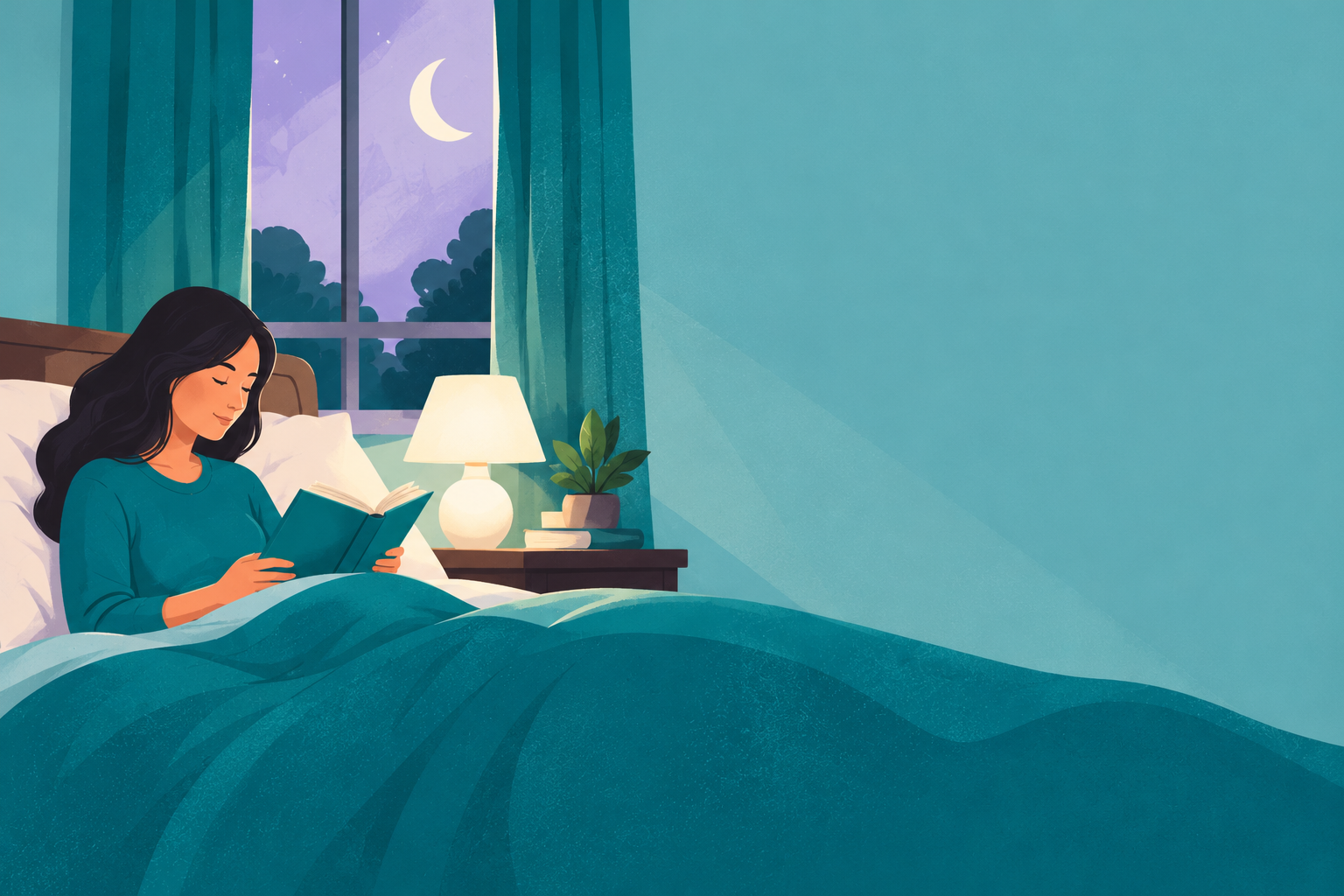
Nighttime anxiety is common. The house is quiet, the distractions are gone, and suddenly your mind replays the day or rehearses tomorrow. The good news: a few simple habits can help your body and mind settle.
Why anxiety gets louder at night
During the day, work and screens keep your attention busy. At night, with fewer distractions, worries feel bigger. Tiredness also makes it harder to regulate emotions, which can create a loop: worry delays sleep, and poor sleep increases worry.
7 calming techniques to try
- Slow breathing. Breathe in for 4 counts, out for 6. A longer exhale helps signal safety to your nervous system.
- Brain dump. Write your worries and tomorrow’s to-dos on paper an hour before bed so your mind doesn’t have to hold them.
- Progressive muscle relaxation. Tense and release each muscle group from your toes to your forehead.
- Dim the lights. Lower lighting and screens 60 minutes before bed to support your natural sleep rhythm.
- Read something gentle. A calm book can shift attention away from racing thoughts.
- Keep a steady routine. Going to bed and waking at similar times each day strengthens your body clock.
- Get out of bed if you can’t sleep. After about 20 minutes, do something quiet in low light, then return when sleepy.
When to talk to a professional
If anxiety or sleeplessness lasts for weeks, affects your daily life, or comes with other symptoms, speak with a doctor or mental health professional. Cognitive behavioral therapy for insomnia (CBT-I) is a well-studied option.
This article is for general information and does not replace medical advice.